
20 Micron BOPP Cellophane vs Traditional Wrappers: Stop Henna Cones from Bursting
20 micron biaxially oriented polypropylene (BOPP) provides high tensile strength with zero palm fatigue, making it the global standard for bridal cone rolling.
Why Do Henna Cones Burst Mid-Application?
Every mehendi artist has experienced the nightmare: youre halfway through an intricate bridal arm design, and the cone seam splits open, spilling paste across the brides hand. This happens for two reasons: poor tensile strength in low-grade cellophane, or incorrect seam-overlap taping.
Why Thickness Matters: 15 vs 20 vs 30 Micron
- 15 Micron (Too Thin): Stretches and punctures easily when pressing hard on palm fill-ins.
- 30 Micron (Too Thick): Stiff and causes severe thumb and wrist fatigue after just 1 hour of drawing.
- 20 Micron BOPP (The Sweet Spot): Biaxially oriented film stretched in both machine and transverse directions, giving maximum burst resistance while remaining featherlight to squeeze.
Rolling with a Mini Tape Dispenser for Speed
Using a weighted desktop dispenser allows artists to hold the needle tip with one hand while grabbing a pre-measured strip of high-tack transparent tape with the other. This cuts cone preparation time in half.
Recommended Wholesale Supplies For This Technique
Triple-sifted, tested, and body art quality supplies trusted by wedding artists worldwide.
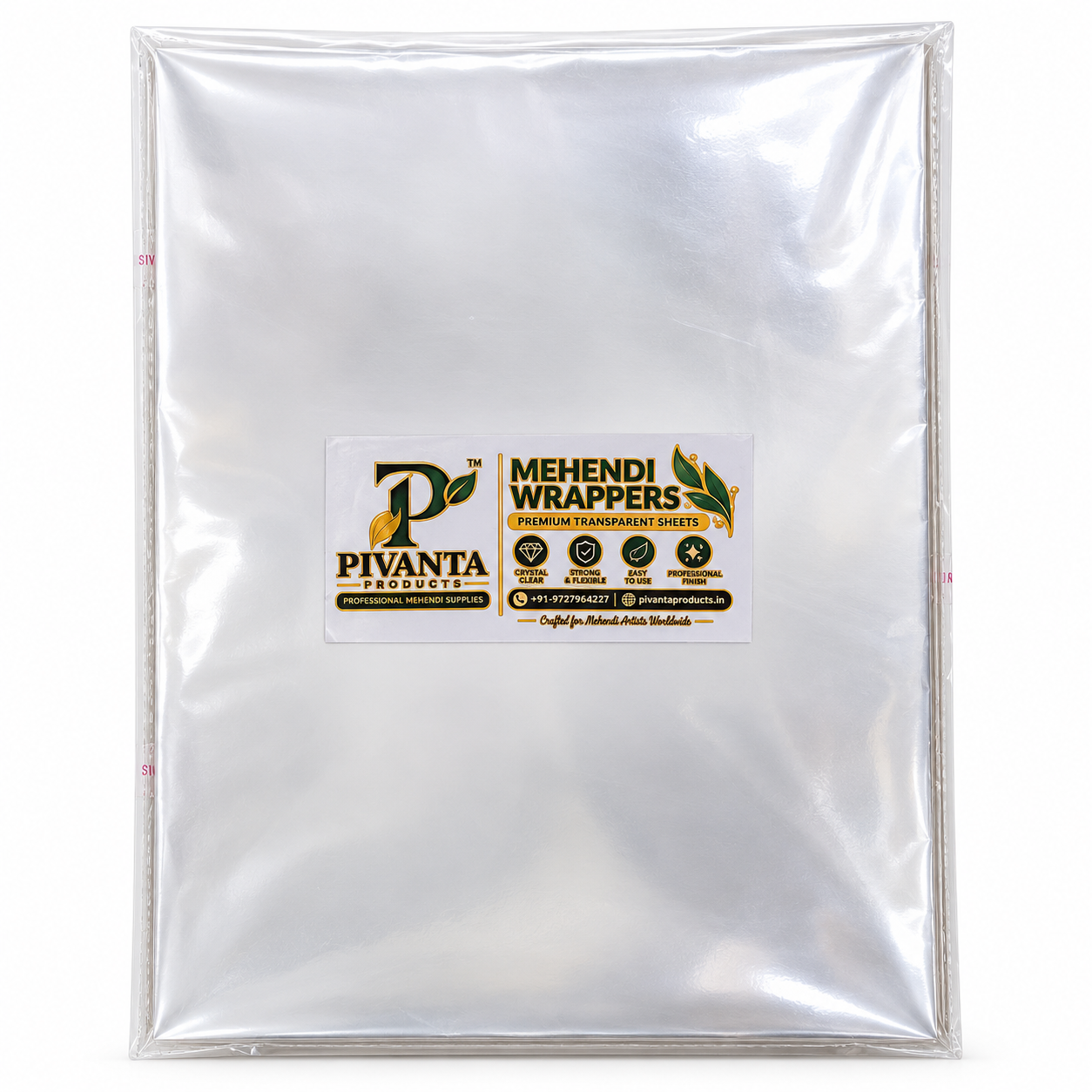
20 Micron Transparent Mehendi Cone Wrappers (5×7 Inch Cellophane Sheets)
MOQ: 100 Sheets / Pack (Retail) | 500g, 1kg, 2kg, 5kg, 10kg, 15kg+ (Bulk Wholesale)
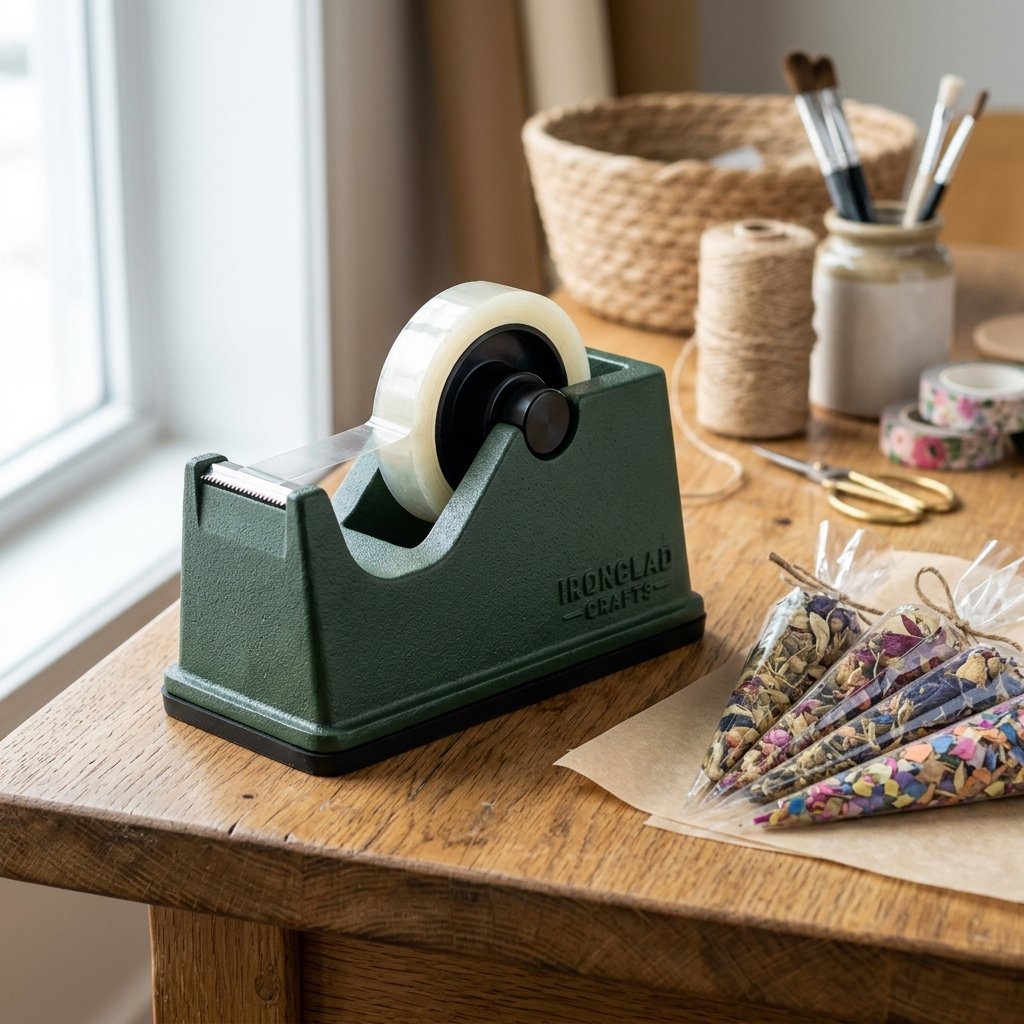
Heavy-Duty Mini Cellotape Dispenser for Cone Rolling
MOQ: 10 Units / Wholesale Master Carton
High-Tack Transparent Cellotapes for Mehendi Cones
MOQ: 1 Box (72 Rolls) / 10 Boxes Master Case